
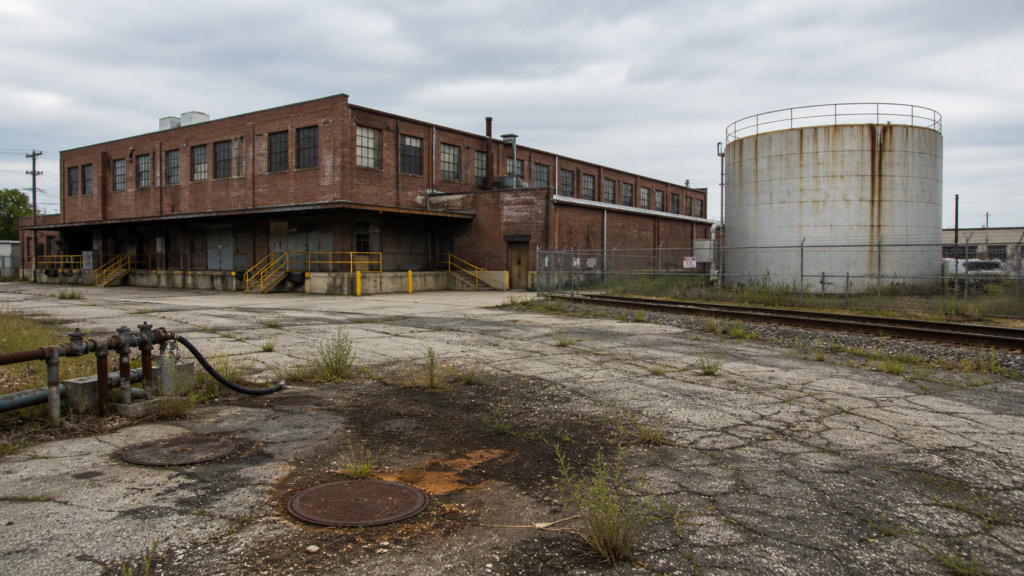
I was dealing with brownfield real estate before the term even existed. Back in the late 1980’s when I was a lawyer, I was dealing with something called LUST, or leaking underground storage tanks. (this is one of the better acronyms I have come across). The tanks would make, literally, quite a mess, and I had to figure out all the environmental implications of bad stuff leaking into the soil. This was not the high point of me being a lawyer.
The term “Brownfield” became a common term in the early 1990s, and was formally advanced by the U.S. EPA in 1995. Now, when companies evaluate U.S. expansion, the real estate conversation usually starts with greenfield sites: open land, new construction, new infrastructure, and the promise of a clean property (in other words pretty sites).
While greenfield makes sense, and you should absolutely consider for your clients, that may not be a complete analysis.
In many cases, the smarter opportunity may be an older industrial or commercial property that already has what companies need most: location, infrastructure, utilities, transportation access, zoning compatibility, and proximity to an existing workforce.
In other words, a brownfield.
A brownfield is a property where redevelopment or reuse may be complicated by the presence, or potential presence, of environmental contamination. That does not mean the site is unusable. It does not mean it is unsafe. And it certainly does not mean it should automatically be rejected.
It means the property has a history that needs to be understood.
Those projects taught me an important lesson: environmental risk is not the same as environmental uncertainty.
Risk can often be investigated, measured, managed, insured, remediated, and addressed through regulatory programs. Uncertainty, on the other hand, is what scares buyers, lenders, investors, and corporate decision-makers away.
That is why early due diligence matters so much.
For an international company entering the U.S. market, a brownfield site can offer several advantages:
It may already have roads, water, sewer, power, rail, or port access.
It may be in an established industrial corridor where the community is already familiar with commercial or manufacturing use.
It may be closer to workers, suppliers, customers, and logistics routes.
It may qualify for grants, tax credits, low-interest loans, infrastructure support, property tax abatements, or other brownfield redevelopment incentives.
It may also give the company a stronger community story: instead of consuming undeveloped land, the company is helping return an underused property to productive life.
That matters.
Communities benefit when brownfields are responsibly redeveloped. Vacant or underused properties can drag down surrounding areas, create safety concerns, reduce tax revenue, and discourage investment. When those properties are cleaned up and reused, they can create jobs, expand the tax base, improve environmental conditions, and bring momentum back to places that need it.
The challenge is that many brownfield opportunities are dismissed too early.
A Phase I environmental report raises a concern, and the buyer gets nervous.
An old underground storage tank appears in the property history, and the site is labeled “too complicated.”
A lender sees environmental language and slows down.
A foreign parent company sees unfamiliar U.S. regulatory terms and assumes the risk is too high.
But the better question is not, “Does this property have a history?”
Most valuable real estate does.
The better question is, “Can we understand the history well enough to make a good business decision?”
That is where state and local agencies can play a major role.
If communities want to attract international investment, they should make brownfield redevelopment easier to evaluate. That does not mean lowering environmental standards. It means creating a clear, predictable, and practical process.
Regulators and economic development agencies can help by:
Providing clear guidance on cleanup standards and regulatory expectations.
Creating a single point of contact for brownfield projects.
Offering early pre-development meetings with environmental, zoning, infrastructure, and economic development officials.
Helping buyers understand voluntary cleanup programs and liability protections.
Making incentive programs easier to identify and apply for.
Using grants or public funds to complete environmental assessments before companies even arrive.
Supporting infrastructure improvements that make reuse financially feasible.
For companies, the key is to bring environmental due diligence into the site selection process early. Do not treat it as a legal box to check at the end of a deal. Understand the site’s history, identify potential issues, engage the right consultants, and speak with regulators before major commitments are made.
Brownfields are not right for every project.
Some sites are too complex, too costly, or too uncertain for a particular use. But many are far more manageable than they appear at first glance.
For international companies coming to the U.S., brownfield real estate should not be viewed only as a problem category.
It should be viewed as a strategic opportunity.
About the Author
Gary Sumihiro is a global investment advisor and strategist. He is a board member of EDGE Partners and the founder of Sumihiro Investments. Mr. Sumihiro was previously appointed by the U.S. Secretary of Commerce to serve on the U.S. Investment Advisory Council and has spoken and judged at international investment forums. Mr. Sumihiro is also slated to judge and speak at the U.S. Department of Commerce’s SelectUSA Summit in Washington, D.C., in May 2026—an event bringing together global business leaders and government officials to shape the future of U.S. foreign investment strategy. If you are serious about understanding how to enter the U.S. market, book some time through my Chief of Staff: mgeorges@edgeparters.us