
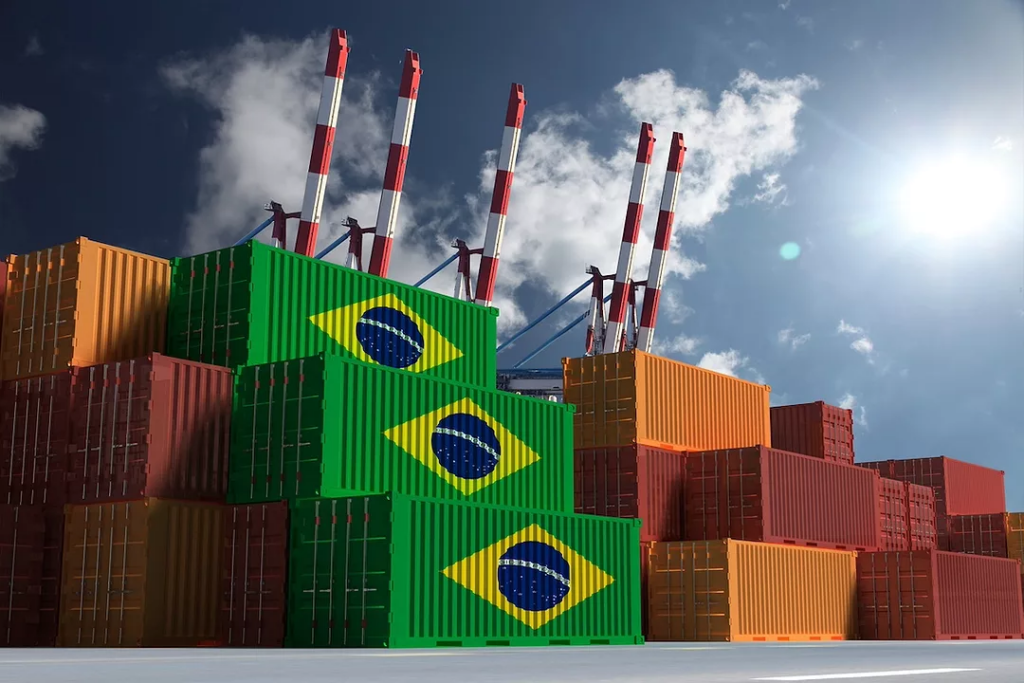
President Trump’s recently announced tariffs affecting Brazil have created an understandable reaction inside Brazilian boardrooms: pause, recalculate, and wait for clarity.
But waiting is not a strategy. I have written a couple of other articles about the business of not making a decision, so just google me and you can find the commonality in my opinion.
The tariffs may change the economics of exporting certain products to the United States. They may compress margins, require price adjustments, or make some supply chains less competitive. Yet they do not erase U.S. demand, eliminate the need for dependable suppliers, or make the world’s largest consumer market irrelevant.
Brazilian companies should take the tariffs seriously—but they should not allow short-term trade policy to determine their entire long-term strategy.
Brazilian Companies May Be Asking the Wrong Question
Many executives are asking, “When will the tariffs come down?”
No one can answer that with confidence. In all candor, the past couple of years have been, well, unpredictable. And there is no data point, policy directive, or regulatory scheme that says predictability will be the norm in the near future. Tariffs may be negotiated, expanded, suspended, challenged, or replaced. Building a corporate strategy around one political prediction is risky.
The better question is:
“What U.S. strategy would still make sense if the tariffs remain, increase, decrease, or change form?”
That question leads to better decisions. It encourages companies to build flexibility instead of waiting for certainty that may never arrive.
In an earlier article, I argued that companies should stop organizing their entire strategy around tariff avoidance and instead focus on certainty, speed, and supply. Trade policy increasingly behaves less like a fixed rulebook, and more like a weather system. You cannot control the weather, but you can design a business that continues to operate when conditions change.
The Cost of Waiting Is Easy to Miss
Waiting appears inexpensive because there is no invoice attached to it. But the cost is real.
While one Brazilian company delays, a competitor may hire a U.S. sales executive, sign a distributor, secure warehouse space, qualify as an approved supplier, or develop a local service network.
By the time tariffs fall—or executives simply become more comfortable with them—the strongest customer relationships may already belong to someone else.
The first companies to establish credibility often gain more than early revenue. They learn how American customers buy, what service levels they expect, which regions offer the strongest workforce and logistics, and how their products may need to be adapted.
A company that begins learning now will be better prepared under almost any future tariff scenario.
Do Not Build a Business Based Only on Tariff Avoidance
There is an important difference between legitimate tariff planning and creating an artificial structure designed only to avoid duties.
Legitimate planning may include improving product classification, changing suppliers, redesigning products, establishing meaningful U.S. assembly, using contract manufacturing, or relocating genuine value-added activities. These decisions can be commercially sound and legally compliant.
Artificial avoidance—such as routing products through another country without meaningful transformation, disguising origin, or misclassifying goods—can create customs penalties, investigations, and reputational damage.
It also creates a fragile business.
A company built only around today’s tariff gap may lose its advantage when the rules change. A stronger U.S. operation should create value even if tariffs decline. It should improve delivery times, customer service, inventory availability, customization, or supply-chain resilience.
A useful test is simple:
Would this operating model still make sense if the tariff changed tomorrow?
If the answer is yes, the company may be building a durable market strategy. If the answer is no, it may only be building a temporary workaround.
A Better Approach: Enter the U.S. Market in Phases
Brazilian companies do not have to choose between exporting everything from Brazil and immediately building a large U.S. factory.
There are many steps in between.
A phased strategy might begin with a U.S. commercial presence, local sales leadership, third-party warehousing, technical support, or a service operation. The next phase could involve local assembly, product customization, contract manufacturing, a joint venture, or an acquisition.
This approach allows the company to learn before committing major capital.
It also creates options. If demand grows, the company can expand. If tariffs rise, local operations can deepen. If tariffs fall, the company can continue importing selected products while retaining the customer relationships and service capabilities it has already built.
The objective is not to make a reckless investment. It is to avoid becoming strategically frozen.
Focus on Certainty, Speed, and Supply
Brazilian executives cannot create certainty in Washington. They can create certainty inside their own organizations. Remember, the current administration sometimes makes regulatory policy based on the President’s late night tweet….
Certainty means knowing the real landed cost of each product, understanding customs exposure, defining decision triggers, and preparing for several plausible scenarios.
Speed also matters. Companies should be able to update pricing, communicate with customers, qualify suppliers, and evaluate locations faster than competitors. During uncertainty, a quick and credible response can strengthen customer confidence.
Supply may matter most of all. Customers want to know whether products will arrive, whether service will be available, and whether the supplier has a contingency plan. A resilient supply network may include dual sourcing, U.S. inventory, local repair capacity, contract assembly, or domestic production of selected components.
Tariffs are one risk. An unreliable supply chain is another—and often a more damaging one.
What Brazilian Companies Should Do Now
The immediate task is not to predict U.S. politics. It is to replace assumptions with facts.
Brazilian companies should identify which products and customers are most exposed, model several tariff scenarios, review classifications and origin documentation, and speak directly with U.S. customers.
Those conversations should not begin with, “Will you pay the tariff?”
A better question is:
“What supply arrangement would make us more valuable to you?”
The answer may reveal opportunities involving local inventory, faster delivery, technical support, product customization, joint forecasting, or multiyear purchasing commitments.
Management should then compare several operating models: continued exporting, a U.S. warehouse, local service, contract assembly, a partnership, an acquisition, or phased manufacturing.
The company may ultimately decide not to make a large U.S. investment. That can be a valid decision. But it should be based on customer demand, operating economics, and long-term strategy—not fear of the latest headline.
Final Thought
Brazilian companies should not let temporary tariff uncertainty become a permanent strategic disadvantage. The smarter path is to evaluate the risks carefully, build a phased U.S. market-entry plan, and invest in customer relationships, local capabilities, and supply-chain resilience that will remain valuable under multiple policy scenarios. Tariffs may rise, fall, or change form, but the importance of the U.S. market will not disappear. The companies that act thoughtfully now will be better positioned than those that wait for perfect clarity that may never come.
About the Author
Gary Sumihiro is a global investment advisor and strategist. He is a board member of EDGE Partners and the founder of Sumihiro Investments. Mr. Sumihiro was previously appointed by the U.S. Secretary of Commerce to serve on the U.S. Investment Advisory Council. In May 2026, Mr. Sumihiro judged and spoke in the U.S. Department of Commerce’s SelectUSA Summit in Washington D.C. Most recently, he was interviewed by the Yomiuri Shimbun, the world’s largest newspaper – see article here with translation.
For EDGE inquires, please email us at gsumihiro@edgepartners.us