
Image from Ikon Images / Getty Images
Introduction
Don’t think of this as a political article. It’s more a reflection on how did we get to this point in political discourse that we simply can’t talk to each other anymore.
With the recent elections, I have been thinking more of bipartisanship. Is it possible, or still an improbable aspirational concept? Tariffs and FDI are often on my mind so there are some nonpartisan thoughts in this article.
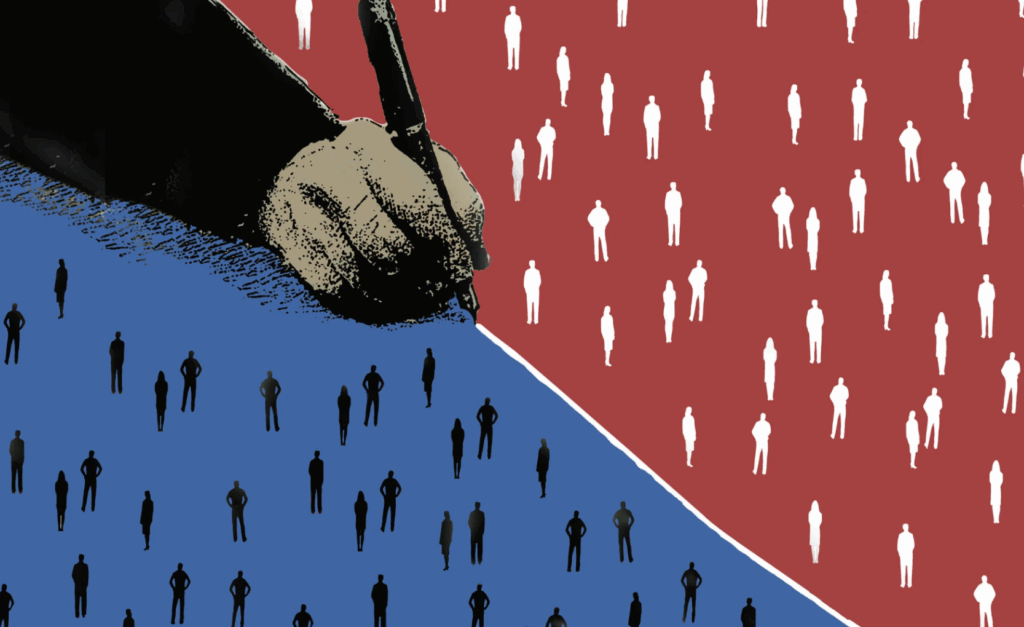
Why does it feel like we’re constantly fighting as a country? Turn on the TV, scroll through social media, or attend any heated town hall meeting, and it seems like America is stuck in a permanent red-vs-blue, us-vs-them standoff. But here’s the thing, most politicians, media outlets, and even many voters miss—there’s a large, quiet, reasonable middle. A lot of Americans actually want to talk, negotiate, and find middle ground. But that’s not what gets clicks, votes, or headlines.
It’s easier to rally people around black-and-white answers. Do you want tariffs? Yes or no. More foreign investment? Good or bad. But that kind of simplicity ignores the complex reality of governing a country of over 300 million diverse people. Governing isn’t about binary answers. It’s about navigating trade-offs, hearing all voices, and making decisions that work for everyone—not just the far left or far right.
The Rise of Political Polarization
How did we get here? How did politics turn into a battleground of extremes, where compromise is seen as betrayal? Part of the blame lies in our recent political history. Over the past few decades, parties have become more ideologically uniform. There was a time when conservative Democrats and liberal Republicans existed—and even worked together. But gerrymandering, media fragmentation, and ideological purges have pushed both parties toward the edges.
Add to that, the rise of partisan cable news, algorithm-driven social media platforms, and a constant election cycle, and you’ve got a recipe for division. These forces reward outrage over dialogue. They prioritize “owning” the other side over solving actual problems. It’s a system designed to divide, not unite.
The Role of Yes-or-No Politics
Why does this oversimplification happen? Because it’s easier to sell. Political campaigns are short on time and high on drama. Saying “I’m for tariffs” or “I’m against foreign investment” is punchy, clear, and easy to remember. But that’s not how real-world decisions work.
Governing requires complexity. Tariffs might help protect one industry but hurt consumers and exporters. Foreign investment could bring jobs to one state while raising security concerns elsewhere. These aren’t yes-or-no issues. They require nuance, data, debate, and, most importantly, a willingness to find middle ground. But nuance doesn’t make for great soundbites. It’s not exciting. So it gets ignored.
Why It’s Easier to Market Extremes Than Nuance
Think of politics like advertising. Brands succeed when they have a clear, simple message. “Just Do It.” “Think Different.” Political extremes function the same way. Their slogans are sharp, emotional, and easy to rally behind. “Build the wall.” “Abolish ICE.” Whether you agree or not, you know exactly what they mean.
Now try selling a nuanced policy: “We need targeted immigration reform that balances border security with pathways to citizenship and economic integration.” It’s the right approach—but it doesn’t fit on a bumper sticker. Extremes win the messaging war because they trade in absolutes. But that doesn’t mean they have the best ideas.
Tariffs, Trade, and The Need for Centrist Thinking v Global Bludgeoning
Let’s dig into tariffs as an example. Some argue tariffs protect American jobs and industries. Others say they raise consumer prices and spark trade wars. Both arguments have merit—and both miss part of the picture.
A centrist approach would look at targeted strategic tariffs, while simultaneously pursuing free trade agreements that benefit multiple sectors. It’s not a yes-or-no issue. It’s about knowing when, where, and how to apply economic tools in a way that serves national interests without creating collateral damage. That’s the kind of thinking we need but seems to be lost in favor of a global bludgeoning strategy.
Foreign Direct Investment: A Nuanced Economic Tool
Foreign Direct Investment (FDI) is another hot-button topic. Some see it as a lifeline for economic growth, bringing in jobs, capital, and innovation. Others worry it leads to foreign control over critical industries or loss of local business sovereignty. Again, both sides have a point.
A smart, centrist policy wouldn’t reject FDI outright or open the floodgates blindly. Instead, it would assess investments based on national security, labor impact, and long-term economic sustainability. It’s not “more FDI is good” or “less FDI is patriotic.” It’s about balance—and balance requires discussion, not dogma.
Compromise Is Not Weakness — It’s Leadership
Somewhere along the way, compromise got a bad rap. In today’s political climate, if you work with the other side, you’re labeled a traitor or a sellout. But let’s take a breath and get real—governing a diverse country like the United States isn’t about winning every battle; it’s about finding solutions that work for the most people, most of the time.
Compromise is how we got civil rights legislation, Social Security, infrastructure deals, and even the Constitution itself. The Founding Fathers weren’t all on the same page. They argued, debated, and—yes—compromised. That’s not weakness. That’s leadership. And if we want to fix the gridlock in Washington, we need to start seeing bipartisan cooperation as a sign of maturity, not betrayal.
The Danger of Demonizing the Other Side
One of the biggest obstacles to unity isn’t just disagreement—it’s demonization. It’s not enough to disagree anymore; now we assume that the “other side” is evil, corrupt, or stupid. That kind of thinking poisons democracy.
When we reduce people to stereotypes—liberals, MAGA, socialists, fascists—we lose sight of humanity. And once you stop seeing people as people, you stop listening. That’s how democracies collapse—not with a bang, but with silence and mistrust.
What Real Political Dialogue Looks Like
So what does a healthier democracy look like? It looks like conversations—not shouting matches. It looks like town halls where people ask questions, not accuse. It looks like political leaders who explain their decisions instead of doubling down on dogma.
It also looks like us—everyday citizens—engaging in civil dialogue. That means talking to your neighbors, listening to opposing views, and resisting the urge to cancel someone just because you don’t agree. Democracy isn’t something you watch; it’s something you do. It is possible to go out with people of different political opinions and not get into a fist fight. It is possible to have dinner with diverse opinions and not be worried about someone throwing a bread roll at you…
How We Can Start to Bridge the Divide
Here’s the good news: change is possible. But it starts with us. If we want a country where we can all get along—or at least respectfully disagree—we have to make it happen. How?
- Listen more than you speak.
- Educate yourself.
- Get involved locally.
- Support independent journalism.
- Talk to people outside your bubble.
Most importantly, remember this: America isn’t made up of left and right. It’s made up of people. And people are complicated and messy. We can’t govern this country with one-size-fits-all answers. We need dialogue, nuance, and the courage to meet in the middle.
Conclusion
The truth is, most Americans want to get along. Most of us don’t live in the extremes. We want policies that work, leaders who listen, and a country that’s united—not uniform, but united in purpose.
Yes-or-no politics might win headlines, but they don’t solve real problems. Tariffs, foreign investment, climate policy, healthcare—these are complicated issues that deserve thoughtful solutions, not ideological purity tests.
If we’re ever going to break this cycle of division, we need to start embracing nuance. We need to stop choosing teams and start choosing truth—even when it’s uncomfortable or complex. Governing isn’t about taking sides—it’s about taking responsibility. And it’s time we all stepped up.
About the author
Gary Sumihiro is a board member of EDGE Partners LLC, focused on assisting companies to enter the U.S. as well as go global. Gary is also the founder of Sumihiro Investments LLC, a global strategic advisory firm.For more information about Sumihiro Investments and EDGE Partners see the linked article.